By Tiffany Williams –
Arrowhead Stadium is supposed to be a house of horrors for Denver. On Christmas night, it turned into a time-of-possession clinic, a slow suffocation, and an unmistakable message that the Kansas City Chiefs were dragged into a game they could not control, could not escape, and ultimately could not win.
The Denver Broncos walked into GEHA Field at Arrowhead Stadium and left with a 20–13 win that felt more dominant than the score. This wasn’t a fluke. This wasn’t a lucky bounce. This was Denver grabbing the game by the clock, the trenches, and the quarterback position and refusing to let go.
Kansas City lost this game long before the final kneel-downs. They lost it drive by drive, snap by snap, watching Denver drain the life out of the stadium while their own offense shrank into short throws, stalled runs, and empty possessions.
From the opening kickoff, the Broncos made their intentions clear. They were not there to trade fireworks. They were there to bleed the Chiefs dry.
Denver’s first drive was a statement bordering on disrespectful. Fourteen plays. Over eight minutes gone. Short throws, modest runs, constant conversions. By the time Wil Lutz drilled a 27-yard field goal to make it 3–0, the Chiefs’ defense had already been stuck on the field long enough to feel the night slipping away. Kansas City responded with exactly what Denver wanted: a three-and-out.
That script repeated itself all night. Denver owned the clock. Denver owned the rhythm. Denver owned the emotional temperature of the game.
By the end of the first quarter, Denver had nearly nine minutes of possession. Kansas City barely touched the ball. The Chiefs had two first downs. Denver had four. It wasn’t explosive. It wasn’t flashy. It was surgical.
The second quarter should have been Kansas City’s chance to flip the game. Instead, it exposed the problem. The Chiefs scored first on a short touchdown pass, capitalizing on Denver’s lone mistake of the half. And then… nothing. Kansas City went back into a shell while Denver went right back to work.
Ten minutes and twenty-two seconds of possession for Denver in the second quarter. Four minutes and thirty-eight seconds for Kansas City. That’s not a typo. That’s a warning sign.
Denver ran 20 plays in the quarter. Kansas City ran 10. The Broncos stacked six first downs. The Chiefs managed three. The scoreboard read 7–6 at halftime, but the game itself screamed imbalance.
This was supposed to be Arrowhead. This was supposed to be loud. This was supposed to be intimidating. Instead, it felt like Denver was playing seven-on-seven while Kansas City waited for something to magically change.
It never did.
The third quarter should have been the Chiefs’ moment. Instead, it was the breaking point. Denver came out and did exactly what it had done all night, except now it added efficiency and aggression. Bo Nix didn’t miss a pass in the quarter. Six completions. Sixty yards. No sacks. No panic.
Kansas City, meanwhile, produced zero net yards in the quarter. Zero. Eight plays. Nowhere to go. Nowhere to hide.
Even when the Chiefs did score, it came via a 53-yard field goal. No drive. No momentum. Just a leg keeping them afloat.
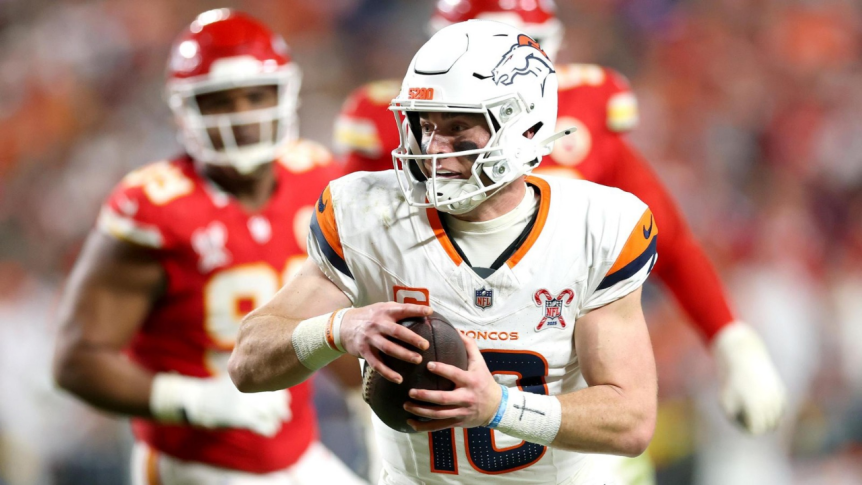
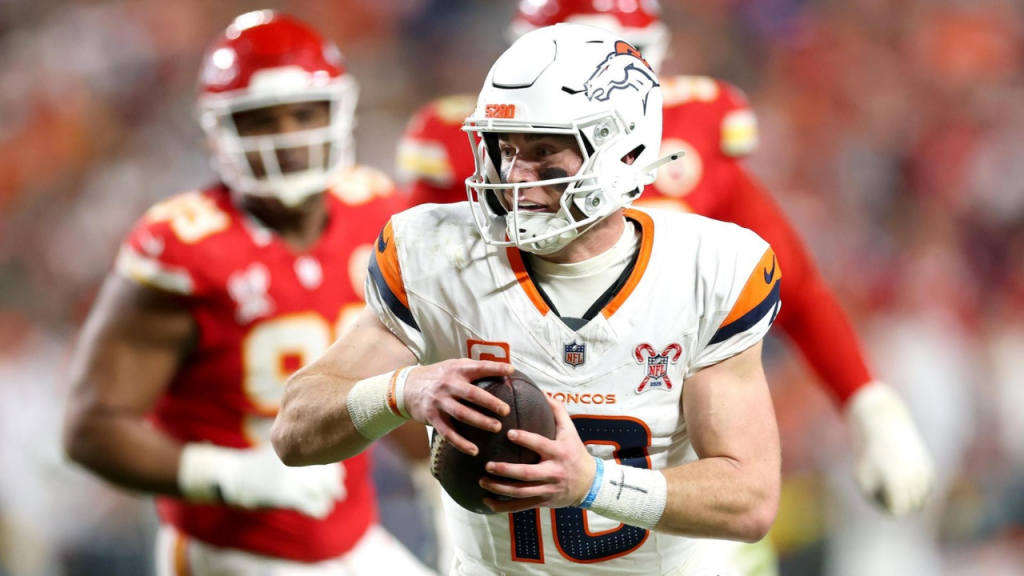
Denver answered the right way. Another long march. Another drain on the clock. Another punch to the gut. Bo Nix capped it with a 9-yard touchdown run, flipping the lead to 13–10 and making it painfully clear who was dictating terms.
At that point, the Chiefs weren’t chasing points. They were chasing air.
The fourth quarter followed the same script. Kansas City tied the game on a long field goal, and for a brief moment, Arrowhead tried to wake up. Denver didn’t blink.
Bo Nix went right back to converting third downs. The run game kept grinding. The clock kept melting. And with under two minutes left, Nix delivered the knockout: a 1-yard touchdown pass to R. Harvey.
Game over.
Kansas City got one last possession. It went nowhere. Denver kneeled. Arrowhead went quiet.
The final numbers tell a story the Chiefs will hate reading. Denver held the ball for nearly 40 minutes. Kansas City barely cracked 20. Denver ran 71 plays. Kansas City ran 42. Denver finished with 22 first downs. The Chiefs had 10.
This wasn’t a quarterback duel. This was a quarterback exposure. Bo Nix wasn’t spectacular, but he was in control. He ran when it mattered. He protected the ball after the early interception. He finished with two total touchdowns and owned the tempo of the game.
Chris Oladokun, on the other hand, spent the night surviving. Short throws. Minimal yardage. One touchdown. One fumble lost. Sixty-six passing yards total. That’s not modern NFL football. That’s emergency management.
The Chiefs’ defense racked up tackles because they had no choice. They were constantly on the field. They were reacting instead of attacking. Denver didn’t need explosive plays. The longest gain of the game was just 23 yards. They didn’t care. They didn’t need it.
This was trench warfare, and Kansas City lost.
Denver finished with more than double the total yardage. Denver converted over 60 percent of its third downs. Denver scored touchdowns in the red zone when it mattered. Kansas City kicked field goals and hoped.
On Christmas night, hope wasn’t enough.
This game wasn’t about weather, luck, or officiating. It was about control. Denver controlled the pace, the ball, the mistakes, and the moments that decide games. Kansas City spent most of the night watching the clock tick down, possession by possession, as their season took another hit.
Arrowhead has seen plenty of big moments. This one belonged to the visitors. The Broncos didn’t steal this game. They took it. And they did it the most humiliating way possible: slowly, methodically, and right in front of a stunned home crowd.
 Sports Insider Daily